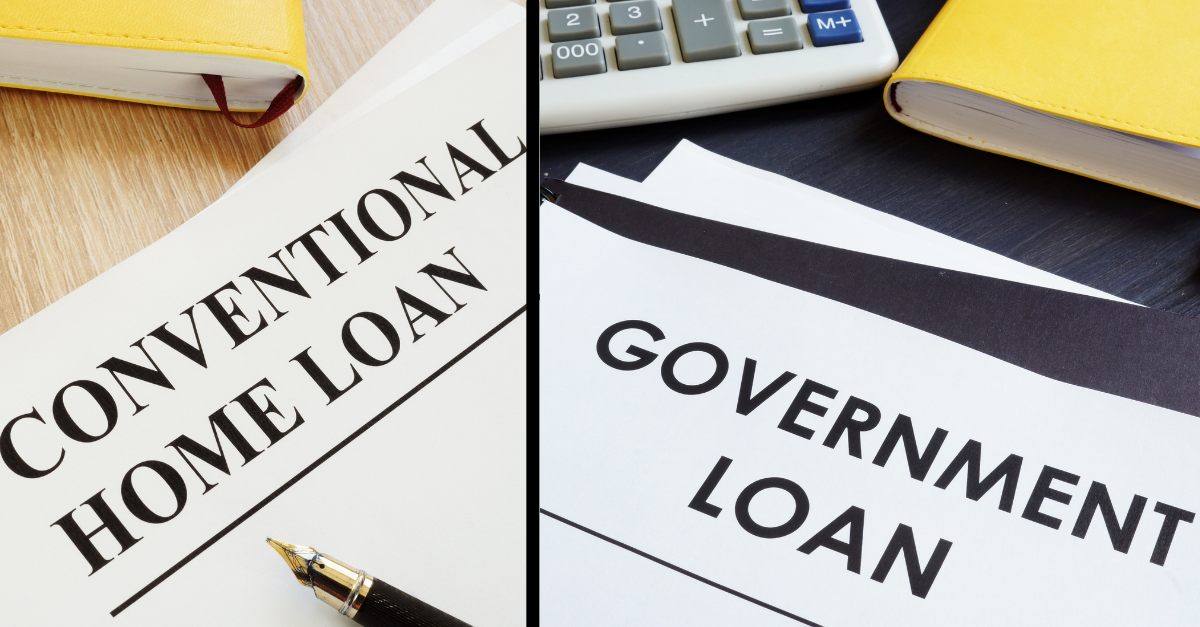
 There are two broad categories of mortgages. The first is government mortgages, which include USDA, FHA, and VA loans. These loans are backed and insured by the United States government. The other category is conventional mortgages. These are mortgages that are insured by private lenders, such as banks and credit unions. What are the differences between these two loan options?
Government Mortgages
The qualifications for government mortgages are usually more lenient than conventional loans. For example, FHA mortgages are usually backed by the Federal Housing Administration. FHA loans could be a smart option for borrowers who might not be able to make a large down payment or who are taking out a loan for the first time. In addition, borrowers with higher debt to income ratios and lower credit scores might also be able to qualify for an FHA loan. While it is possible to qualify for an FHA loan with a lower down payment mortgage insurance might still be required.
Another government mortgage is a VA mortgage. This is a mortgage that is insured by the United States government that is available to members of the military. In order to qualify for a VA loan, a Certificate of Eligibility (COE) is required. While VA loans do not charge mortgage insurance, an upfront funding fee could be charged if certain requirements are not met.
Conventional Mortgages
Conventional mortgages refer to home loans that are created and financed by unions, banks, credit unions, and other lenders not associated with the United States government. When compared to government loans, they usually have stricter guidelines. Borrowers seeking a conventional mortgage usually must have a higher credit score, a larger down payment, and a lower debt to income ratio. If borrowers are not able to put 20 percent down, they might be charged private mortgage insurance (PMI); however, some borrowers might be able to negotiate lender-insured PMI if they are willing to accept a higher interest rate.
Speak To A Loan Officer
The right loan for one person might not be the right loan for someone else. Everyone should speak to a loan officer to figure out which type of home loan is right for them. That way, everyone can negotiate favorable terms on a home loan.
 There are many people who are looking at the housing market wondering if now is the time to make the jump from renting to owning. At the same time, is it more affordable to rent a home? Or, is it a smarter move to buy a home? Even though many people like the comfort of renting because it is someone else’s problem if something goes wrong, waiting too long to purchase a home could be costly. Here are a few of the most important points you need to keep in mind when it comes to renting versus buying a home.
 There are many people wondering where the housing market is going next. While interest rates might be low, attracting a lot of buyers, there are some potential homeowners who are concerned about the current demand in the housing market. This could be driving up home prices, causing some people to pause. Furthermore, some people might be hesitant to sell because they are worried they might have a hard time finding a new home in the current market.